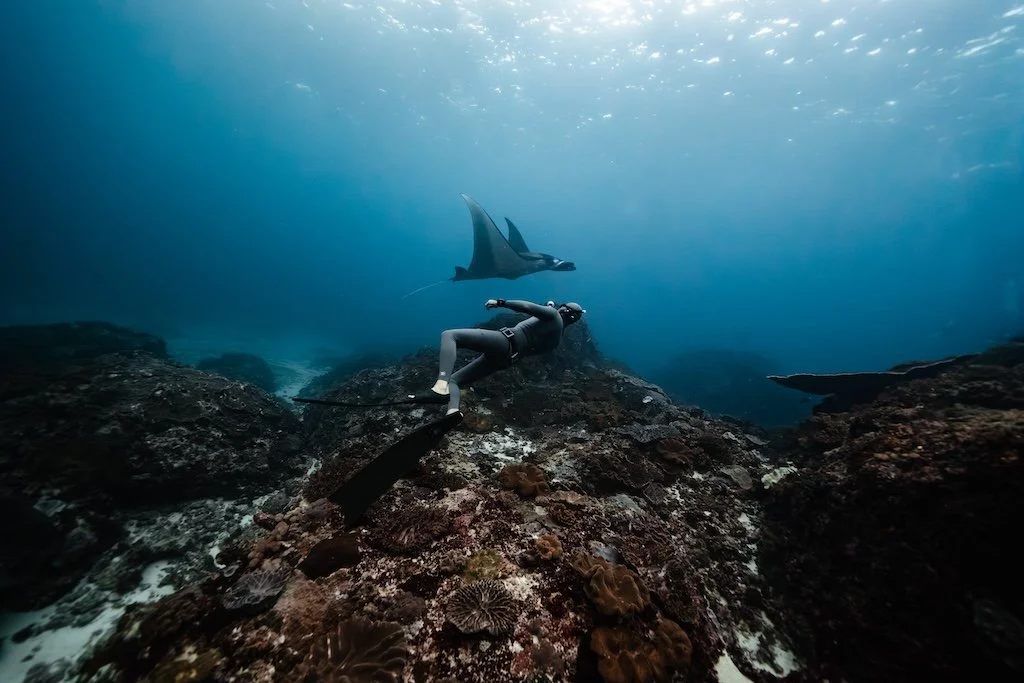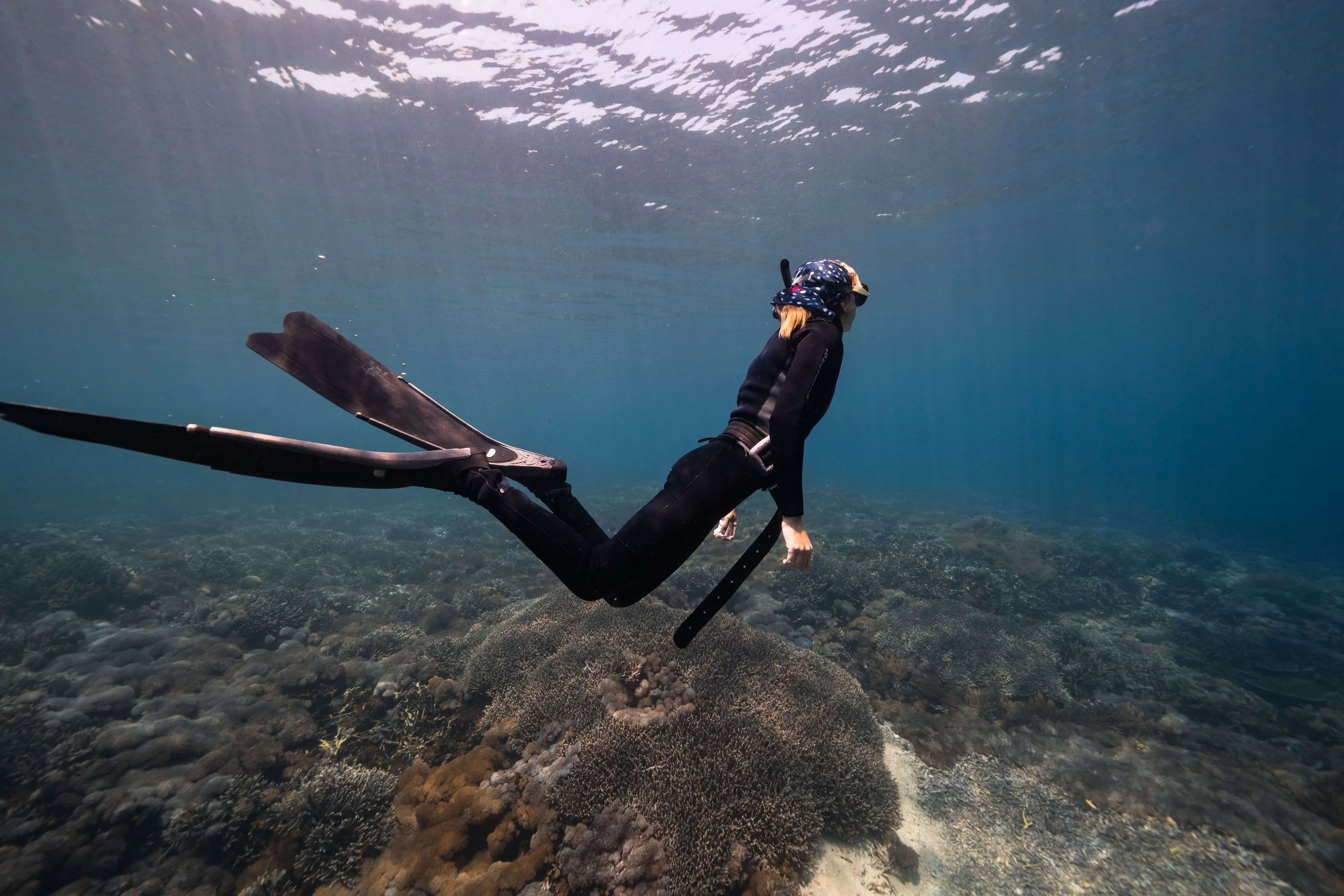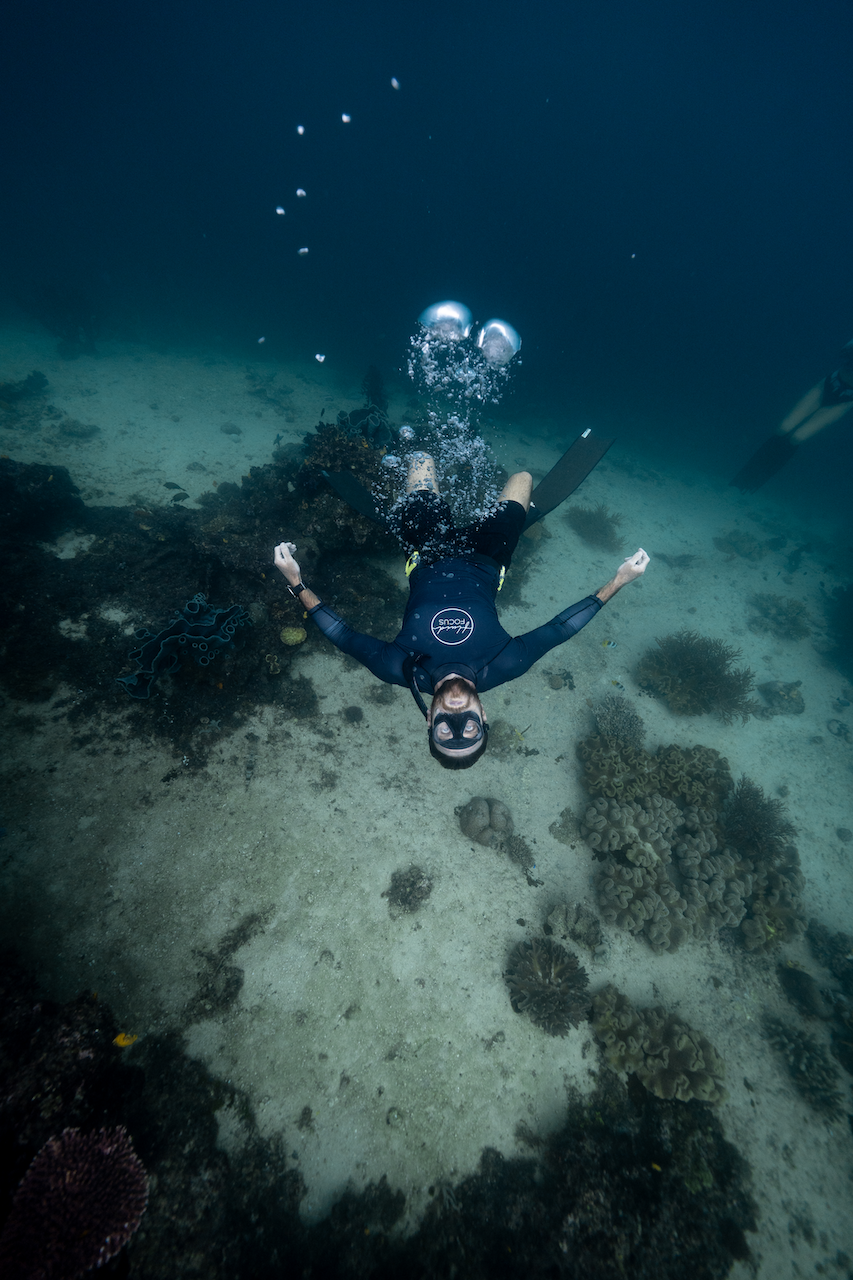
Freedive Rehab started from a simple observation: the most significant shifts in students — the moments where breath and body and ocean start to make sense together — rarely happen in the first three days.
Read More
Freedive Rehab started from a simple observation: the most significant shifts in students — the moments where breath and body and ocean start to make sense together — rarely happen in the first three days.
Read More"Nervous system reset" has become one of the more widely used phrases in wellness in 2026. Like most phrases that travel fast, it has picked up a range of meanings along the way — some accurate, some aspirational, some that quietly overpromise.
Read MoreAnxiety is not a character flaw. It is a physiological state — one that the body produces, maintains, and, with the right training, can learn to exit.
Read MoreThe assumption is that these are Freediving and Surfing are standalone. The reality is that they are complements — and that training them together produces something neither develops alone.
Read MoreThe phrase "water therapy" gets used loosely—to describe everything from hydrotherapy pools in clinical rehabilitation to a morning swim that simply makes someone feel better. The range is so wide it risks becoming meaningless.
Read MoreA growing number of people are turning to disconnection retreats not as a luxury, but as a physiological necessity. And the science behind why they work is more compelling than most wellness marketing would have you believe.
Read MoreNo. Freediving is exceptionally different than snorkelling and it is a real thing. We promise. There’s even specialised freediving equipment - that’s how real it is.
Read MoreBecoming a freediving instructor is an exciting step toward turning your passion into a career. But with multiple organizations offering instructor certifications, how do you choose the right one?
Read MoreFreediving is as much a mental challenge as it is a physical one. While the ability to hold your breath and dive down is essential, it’s your mindset that often determines your success in the water.
Read MoreIn freediving, mental preparation is just as crucial as physical training. The ability to visualize a dive before taking the it can significantly impact performance, relaxation, and confidence.
Read MoreFreediving is a sport that demands both physical and mental mastery, and one of the most powerful tools for improving your performance is breathwork.
Read MoreRead the steps you need to take to becoming a freedive instructor. In this hand-held guide, learn everything you need to know about how to plan for an epic underwater career as a freediving instructor.
Read MoreFreediving is more than a sport; it's a personal journey into the underwater world. It relies on breath, skill, and mental clarity. Whether you're new to freediving or have years of experience, books can greatly improve your understanding and technique.
Read MoreReady to explore the best carbon fiber freediving fins? Compare top models, read in-depth reviews, and find the perfect match for next underwater adventure.
Read MoreA freediving mask isn’t just gear—it’s a critical tool that impacts your safety, comfort, and ability to explore underwater. Unlike snorkeling or scuba diving masks, freediving masks are designed to handle the unique pressures of breath-hold diving.
Read MoreA freediving weight calculator is a tool that estimates the optimal amount of weight a freediver should use to achieve proper buoyancy. It considers factors such as the diver's body weight, wetsuit thickness, water type (saltwater or freshwater), and desired diving depth.
Read MoreJournaling is a powerful tool that can enhance your freediving experience, allowing you to reflect, learn, and grow both before and after each dive. By putting pen to paper, you can capture the unique moments, insights, and emotions associated with your freediving journey.
Read MoreIf you've ever felt the urge to breathe moments or even minutes into a breath-hold, you’ve experienced the effects of rising carbon dioxide (CO₂) levels in your body. Contrary to popular belief, it’s not a lack of oxygen that forces you to take a breath—it’s the increasing presence of CO₂ triggering your brain’s breathing reflex.
Read More